
The trifecta
Cape Town is the rare city where you can summit a thousand-metre mountain in the morning, swim at one of the world’s better beaches in the afternoon, and dine at a vineyard that night, without changing hotels. The geography is unfair.
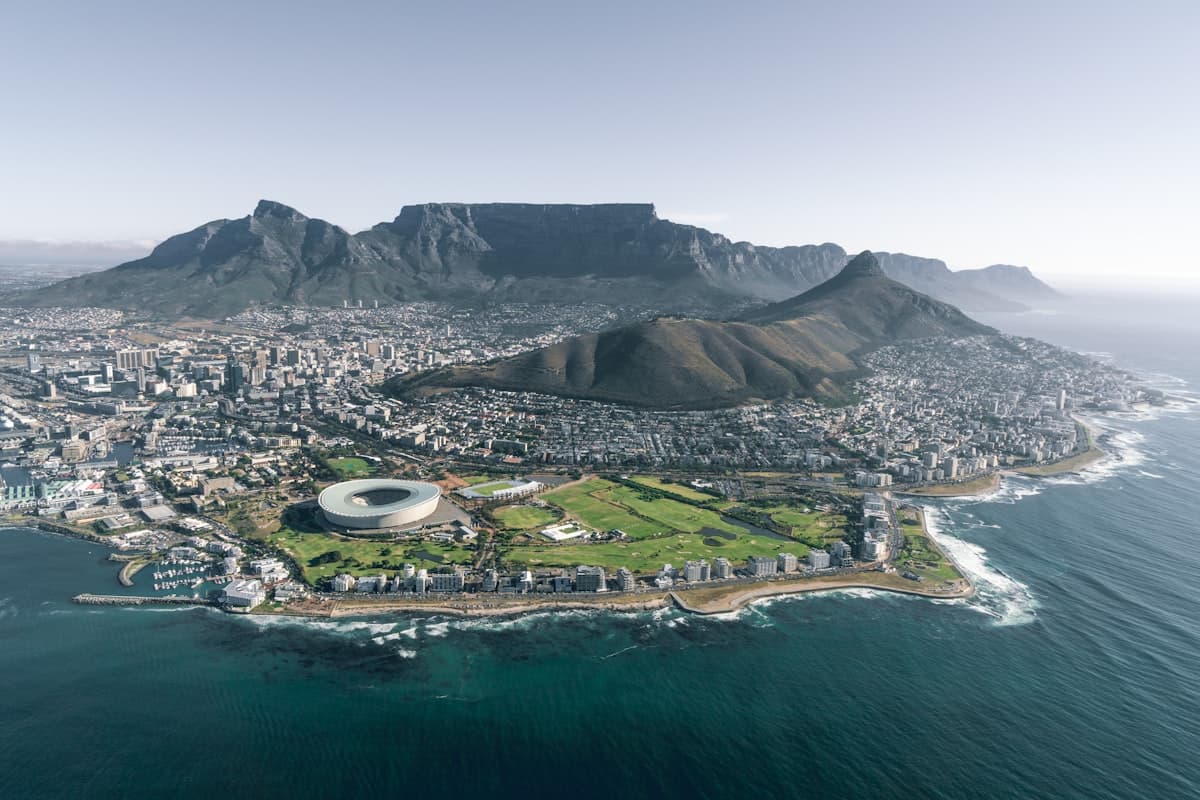
Western Cape, South Africa
Mountain meets ocean meets vineyard, rare trifecta. Table Mountain cable car, penguin colony at Boulders Beach, shark-cage diving in Gansbaai, wine estates an hour east in Franschhoek and Stellenbosch. Safari lodges a short flight north. Bo-Kaap’s painted Malay quarter. V&A Waterfront. A strong pound makes real luxury unusually accessible. Sunsets over the Atlantic, vineyard lunches, fynbos-covered slopes, tidal rock pools along the Cape peninsula.
Best for safari pairings, wine weeks, adventurous milestones and photographer’s holidays.
Cape Town is the rare city where you can summit a thousand-metre mountain in the morning, swim at one of the world’s better beaches in the afternoon, and dine at a vineyard that night, without changing hotels. The geography is unfair.
Cape Town pairs with the Sabi Sand. A two-hour flight north drops you into Big Five private-reserve country. Morning game drives. Sundowners on the Mara. Leopard sightings before breakfast. The contrast is the canonical South African week.
Two flights, two countries.
South Africa’s wine and food scene has sharpened into something serious. La Colombe. Wolfgat. A dozen others. Modern Cape cooking with fynbos, Karoo lamb, indigenous botanicals, at a level that justifies the trip on its own.
October through April. Avoid June through August for rain. February and March are sun-drenched without summer-holiday crowds.
What to know about greetings, the table and dress before you go.
Restaurants: 10% is the floor, 12 to 15% the norm. Petrol attendants at every station expect R5 to 10. Car-guards (the high-vis jackets in carparks) get R5 to 10 on return. Safari guides and trackers: R200 to 500 a day, given at the end of the stay.
Cape Town is multilingual (English, Afrikaans, isiXhosa) and most service staff speak two or three. Opening in English is universally fine; Sawubona (Zulu/Xhosa hello) or Goeie môre (Afrikaans good morning) lands warmly when used in the right setting.
The city is wonderful and parts of it require street smarts. Keep phones in pockets when walking between the V&A Waterfront, the City Bowl, and the southern suburbs. Use Uber or Bolt at night rather than walking. Township visits go through reputable guides only.
The southern hemisphere ozone is thinner and the Atlantic breeze hides UV intensity. SPF 50 reapplied through the day, especially on the cable-car-and-vineyard kind of itinerary. Locals burn less because they pace; visitors fry on day one.
South Africa runs scheduled rolling blackouts (load-shedding) on a published timetable. Most luxury hotels run on inverters or generators; some restaurants will dim the room or move to candles for a 2-hour window. Apps like EskomSePush show the schedule live.
A starting point. Ocean can be specific about any booking on your trip.
Bo-Kaap. Bo-Kaap sunrise. Cape Malay neighbourhood with rainbow-painted houses. Photographers’ paradise before 8am. The spice shop on Rose Street has been family-run for four generations.
From London, about eleven hours by air.
From Cape Town, about 20 minutes by helicopter.
Nothing from Cape Town is in this edit. Ocean can plan a trip here all the same.
Nothing is charged until the trip is confirmed. Ocean is an AI concierge. While Notturno is by invitation, a code from the house is asked for when you confirm. No invitation yet? Request one.